Converting a price per square meter
One hectare is 10,000 m², so an asking price of €1 per square meter means €10,000 per hectare. That conversion is useful when comparing listings, provided you also record what the price includes: buildings, usable fields, forest, road frontage and any documented development rights.
What moves the price per hectare
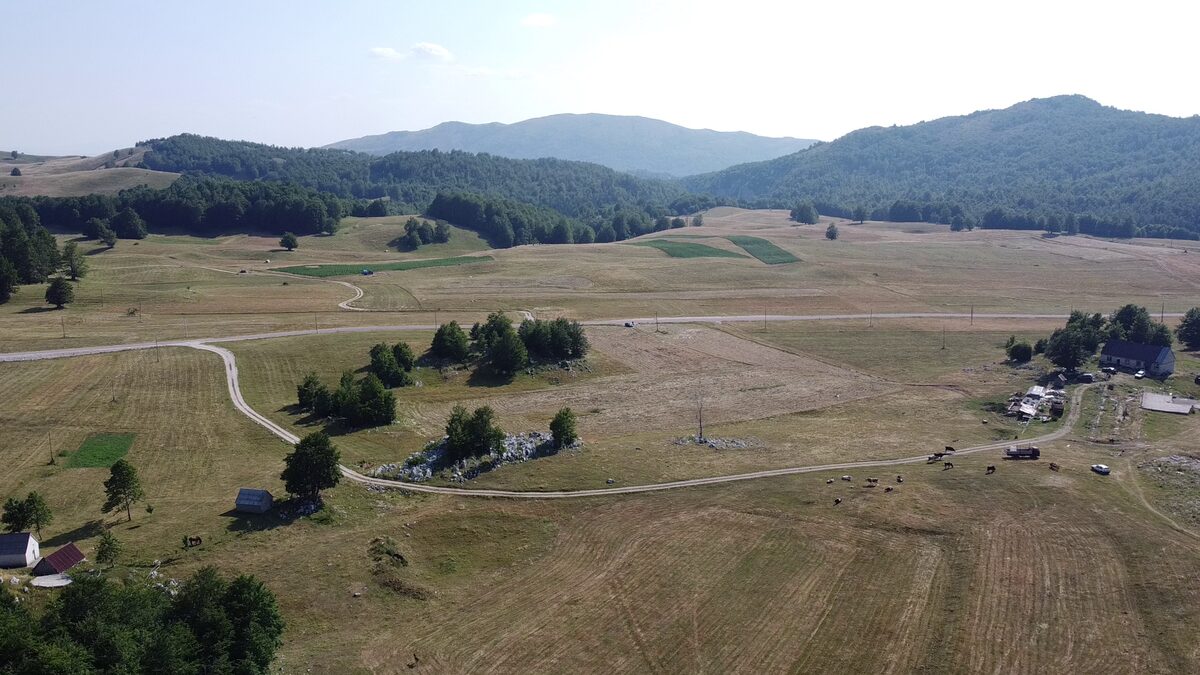
Rural asking prices in Montenegro span a wide range, and most of the spread comes down to a few factors rather than the quality of the grass. Distance to the coast and to a town is the first: a small plot in the hinterland of Bar or Budva is priced against vacation-home demand, while a large holding on an inland plateau is priced against farming and forestry. Size is the second: the larger the holding, the lower the unit price tends to be, because few buyers need, or can finance, hundreds of thousands of square meters at once. The rest depends on what the price includes. A registered house, asphalt frontage, electricity on site, a water source and a parcel with confirmed building conditions each add value; bare pasture reached by a track does not.
For that reason, compare a listing's price per hectare only after reading what the hectares consist of. Two plots at the same unit price can be a fenced hay meadow by the road and steep woodland with no access.
What a unit price leaves out
A low unit price can still involve substantial work. Walk the land and identify how much can be reached by machinery, where a fence could run and whether the useful sections connect. A road on the map needs checking for lawful access.
Planning status deserves particular attention. Agricultural land, woodland and a parcel with confirmed building conditions serve different purposes. If an advertisement suggests development potential, obtain the documents described in the rural building guide.
Asking price, sale price, assessed value
An asking price records what a seller seeks. A completed transaction records what a buyer paid, and the tax authority's assessed value serves a separate purpose. Compare them with your reasons for buying rural land, and add the transaction and annual ownership costs before deciding what you can afford.