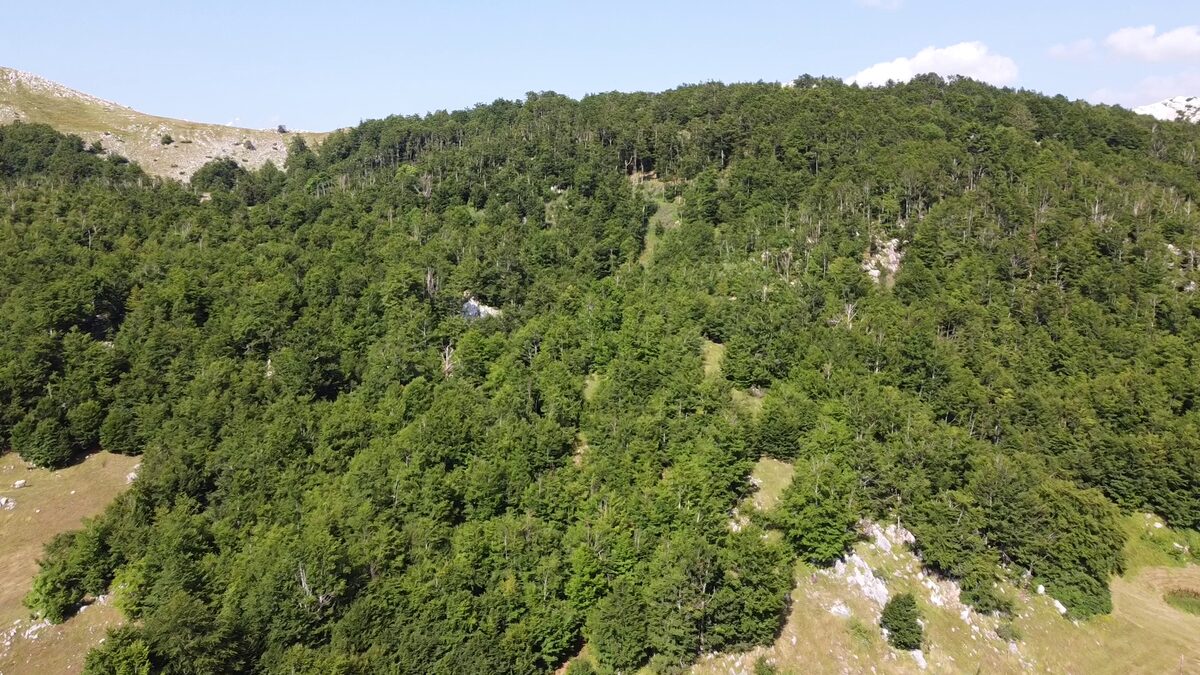
Inspecting the woodland
A private-forest viewing should include a walk beneath the canopy. Look for young growth, damaged trees, steep ground and old extraction tracks. Ask when timber was last removed, which documents covered the work and whether neighboring owners use any tracks through the holding.
The cadastral record identifies forest as šume and gives its class and area; the Krnovo woodland is recorded as class 3. For a purchase, compare that description with the current vegetation and the parcel boundaries. A forestry inspection can establish species, condition, regeneration and standing timber volume.
Felling and timber under the Forest Law
Under Montenegro's Forest Law, felling follows the applicable management arrangements and requires tree selection, marking and approval. An owner applies with evidence of ownership; the approval specifies the authorized trees or quantity and conditions. Planning to burn the wood at home does not remove these requirements.
Timber also needs the prescribed measurement and marking before removal, and timber placed on the market needs origin documents. Owners have regeneration and fire-prevention obligations, while maintenance of private forest roads falls to their owners. Open fires in forests are restricted to designated places. Confirm the current application procedure with the Forestry Administration's local office before arranging a cut.
Budgets and changes of use
For a working budget, ask a forester to distinguish what can be removed lawfully from what can be extracted economically. Obtain separate prices for cutting, moving logs to a road and transporting them to the house or buyer. Steep terrain or a poor track can make a small harvest expensive.
Woodland also raises questions when the intended use changes, and the starting point is a prohibition rather than a permission. The Forest Law bans permanent and temporary structures in forest and on forest land unless they serve forest management, game and hunting, nature protection or the public interest, or a special law provides otherwise. Clearing forest to change its use is allowed only where a state planning document, the municipal spatial-urban plan or a forest development plan provides for it, and never in protective forest. Private ownership alone therefore does not establish permission for a vacation cabin, a glamping platform or a cleared campsite inside the registered forest. Any such proposal needs a written assessment of the forestry rules and of the planning position for rural land for the exact parcels. Overseas purchasers should also understand the restrictions on direct ownership of forest before choosing how to hold the property.