A working plateau
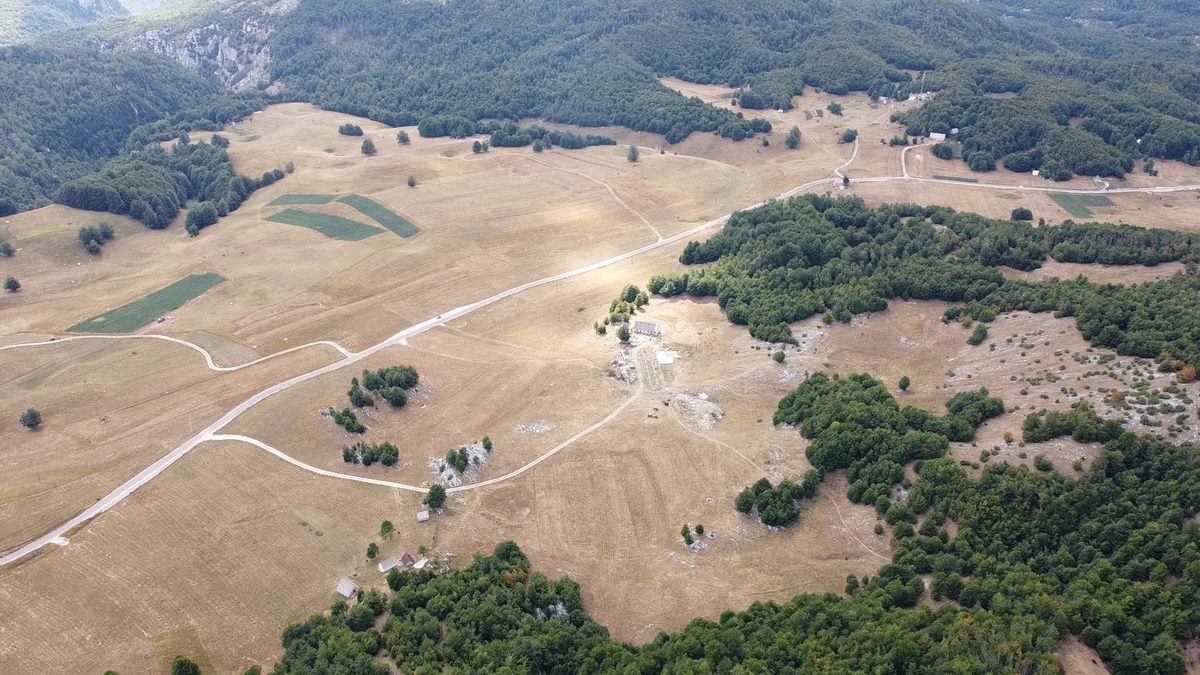
Krnovo is high pasture country between Nikšić and Šavnik, with much of the plateau around 1,500 meters above sea level. Open grazing, hay meadows and limestone outcrops give it a different appearance from the steep, wooded valleys below. Wind turbines are a conspicuous part of the skyline.
The agricultural pattern is seasonal. Katuni are the mountain settlements where herders take livestock to summer pasture, bringing people and animals onto ground that cannot support the same routine throughout the year. The buildings, tracks and hay meadows belong to that working landscape.
Summer and fall
Summer is the useful season for understanding how the land is worked. Mown fields show which areas are being worked. Walk the access tracks and check the slopes before deciding what machinery could be used. At Gradačka Poljana, the lower meadow is cut for hay and grazed by cattle in summer, as the gallery shows. Woodland creates sheltered pockets, while the open ridge gives a much broader view. In the fall, beech foliage changes color and the grass loses its summer growth.
Winter and spring
Winter changes the practical geography. Wind can move snow back onto a cleared stretch, and a road that is straightforward in dry weather can become a difficult approach. Akuo, the developer of Krnovo wind farm, records a four-month interruption to construction during winter. That experience illustrates the exposure of the area, although it does not establish a closure calendar for local roads.
Anyone considering regular winter stays should ask about the exact route, clearance arrangements and places where drifting occurs. Spring is also a useful time to inspect drainage, thaw damage and the condition of access tracks. The road, water and electricity guide covers these checks, while Vučje’s outdoor activities explain the nearby seasonal offer.